

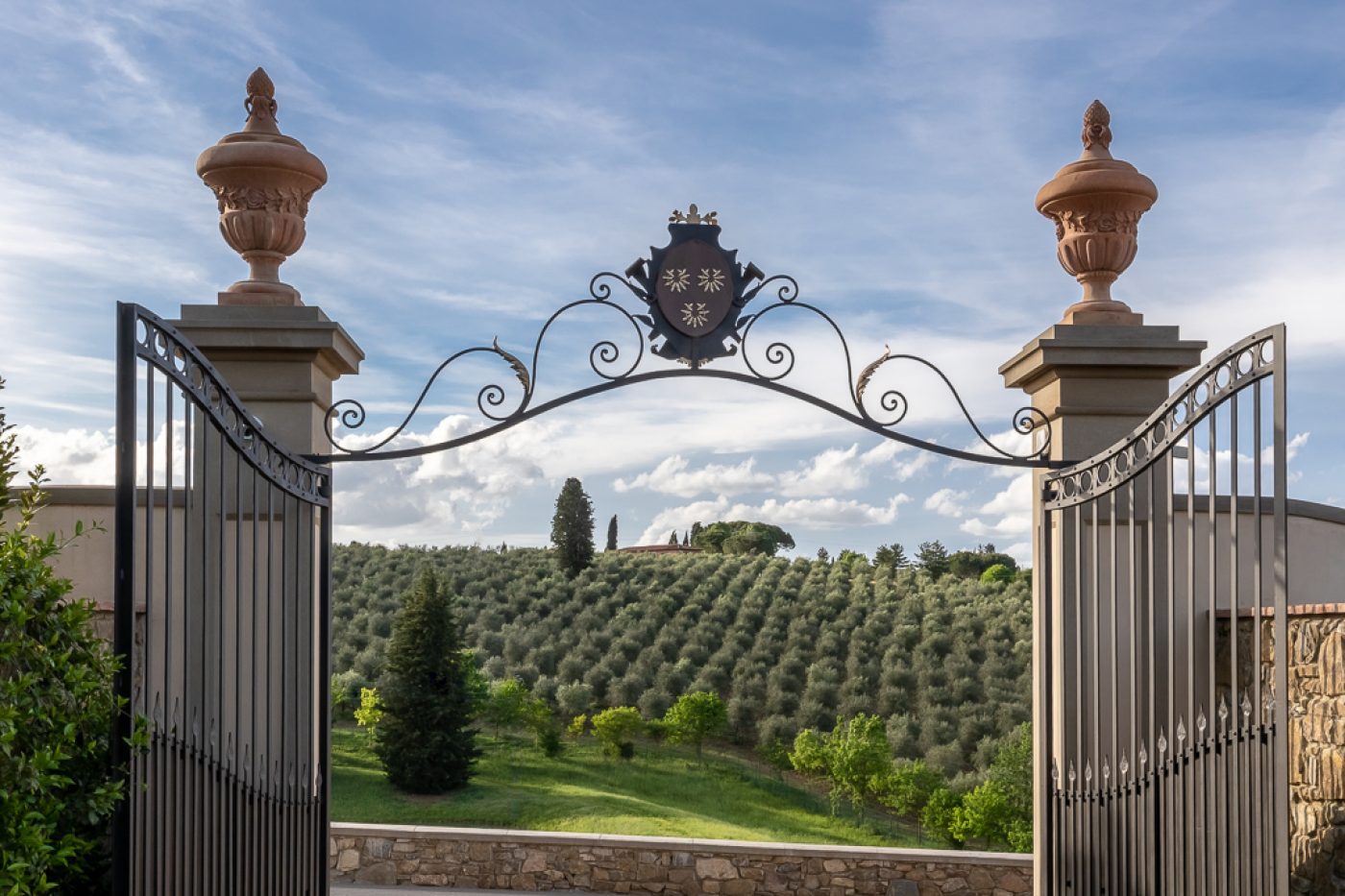
Dimora Ghirlandaio is a historic residence near Florence city center, formerly home to the family of Domenico Ghirlandaio, one of the painters who worked on the frescoes of the Sistine Chapel in Rome. The Renaissance buildings have been carefully restored, including the Chapel of the Visitation of the Blessed Virgin Mary painted by Ridolfo Ghirlandaio, Domenico’s son. Today, the villas within the hamlet are available for private or business stays, offering an environment where heritage and contemporary comfort coexist naturally.
The founding of Dimora Ghirlandaio: 1433-1482
The history of the estate dates back to 1433, when it belonged to Maria di Bartolomeo Giambello. It later became the property of the goldsmith Tommaso Bigordi, father of Domenico Ghirlandaio, through his marriage to Antonia, daughter of Giambello. Tommaso was known as “Ghirlandaio” for his skill in crafting garlands (ghirlande) for the hairstyles of Florentine women, and the nickname was later passed on to his son. After his father’s death, Domenico, one of the leading painters of the Renaissance, inherited the property and used it as his countryside home (dimora), where he found inspiration.
The Ghirlandaio family years: 1482-1562
During the years in which the estate belonged to the Ghirlandaio family, the property expanded in both land and buildings. Vineyards, olive groves and productive spaces formed part of daily life. The hamlet welcomed artists and guests of the period, including Raphael and Michelangelo, who gathered here alongside Domenico, his brothers David and Benedetto, and his son Ridolfo. When Ridolfo inherited the estate, the family’s presence continued, and the private chapel was decorated with frescoes that were later restored.
From the Marquises Pannocchieschi d’Elci to the present
After the Ghirlandaio family, the Dimora passed through several Florentine owners. At the end of the seventeenth century, it was acquired by the Marquises Pannocchieschi d’Elci, followed in the nineteenth century by the Agostini family. In 2010, the property was acquired by the Cecchi family, who undertook a careful restoration of the entire hamlet, returning coherence and continuity to its historic spaces.
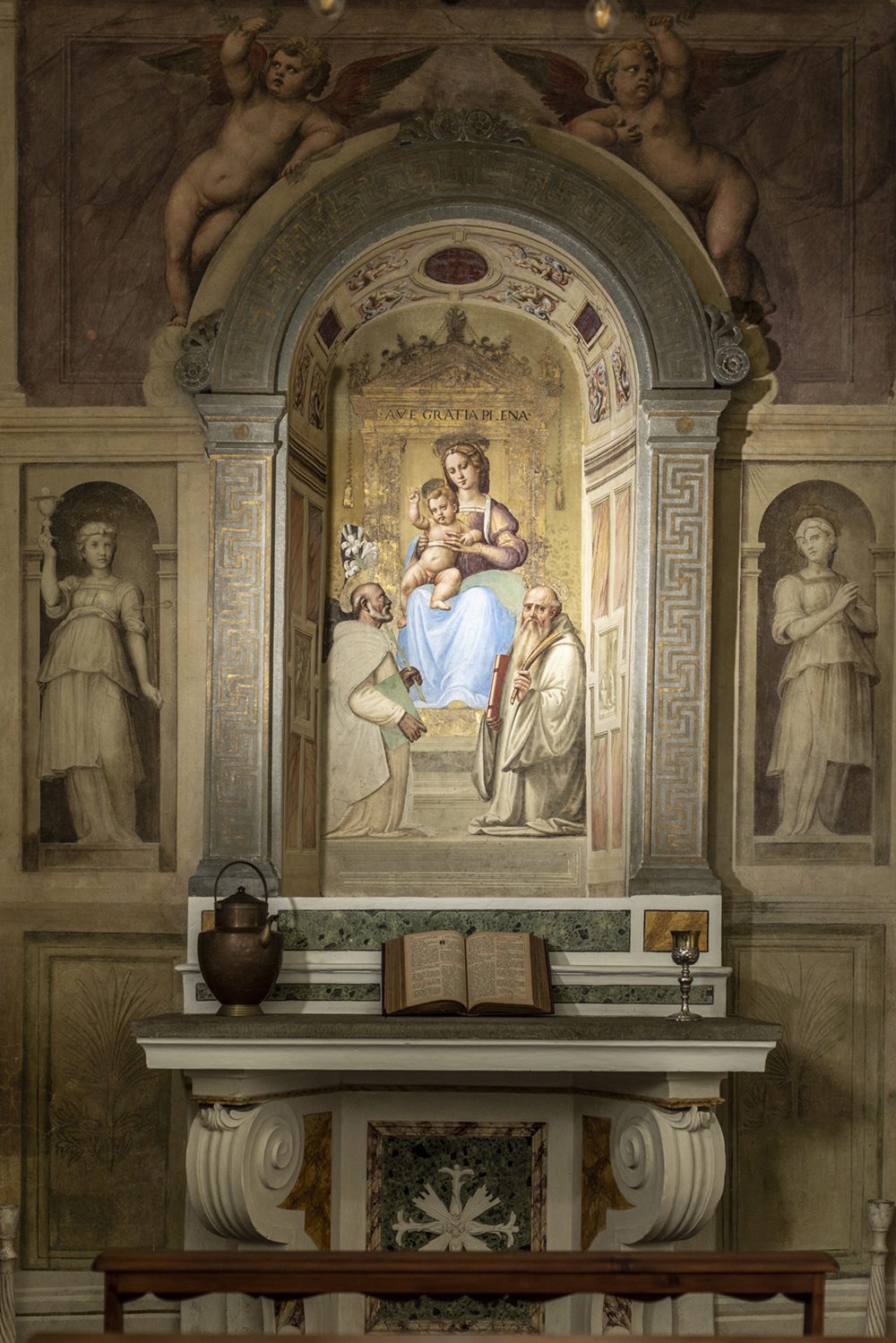
THE CAPPELLA GHIRLANDAIO AND THE RESTORED WORKS
The Cappella Ghirlandaio, a chapel dedicated to the Visitation of the Blessed Virgin Mary, was built in the sixteenth century for the family’s private use. The frescoes painted by Ridolfo Ghirlandaio depict the Madonna and Child, alongside portraits of family members, paying tribute to his father Domenico Ghirlandaio, his uncles, his wife Contessina, and two of their children. The chapel also houses the tombs of the Pannocchieschi d’Elci family. Recently restored, it remains an integral part of the artistic and historical identity of the estate.
Where is the Cappella Ghirlandaio?
The Cappella Ghirlandaio is an integral part of Dimora Ghirlandaio, as it was destined for the private use of the family by the same name. During your stay, you will be able to admire its precious collection of frescos by Ridolfo Ghirlandaio and its recently restored structure.
Are these the original artworks?
Yes, the works preserved inside the Chapel are the frescos painted by Ridolfo Ghirlandaio.
Who can visit the Chapel?
The Chapel is private and may be accessed by the guests of Dimora Ghirlandaio. To share this important treasure with the public, it may also be visited upon advance reservation.
Are the buildings of Dimora Ghirlandaio the same as in the Renaissance?
The buildings in Colle Ramole were restored by the present owners to salvage them from the state of neglect into which they had fallen. To respect their original appearance, artisans and workers specialized in the style typical of the Tuscan countryside were hired. Where this was possible, the structures were rebuilt based on the original edifices. Furthermore, they have been equipped with every modern comfort to enhance our guests’ stay at the Dimora.